Showing posts with label creativity. Show all posts

Hypersensitivity: a creative's bane

by Friday, October 22, 2010
Lateral Action hits it out of the park again and again. Thought I would share this snippet from their "Dark Side of Creativity - Burnout" article.  And if this section sounds familiar, you should read the parts about Control Freakery and expectations!

"Hypersnsitivity
Why are creative people so sensitive to criticism of their work? Because our work is not just something we do, it’s an expression of who we are. As Gustave Flaubert put it:
A book is essentially organic, part of ourselves. We tear a length of gut from our bellies and serve it up.
So when the critics get their knives out, it feels like a direct personal attack. When nobody comes to the show it feels as if your innermost soul has been rejected. And again, this is as it should be – up to a point. If you didn’t care enough to put your heart and soul into your work, there would be no reason for anyone else to care about it. But if you really want to improve, you have to learn to let go of the work, to stand back and appraise it coldly, to see whether it measures up to the standards you aspire to. And you have to be able to listen to others’ feedback and see whether you can learn from it. Otherwise you set yourself up for a world of pain each time you present your work to an audience."

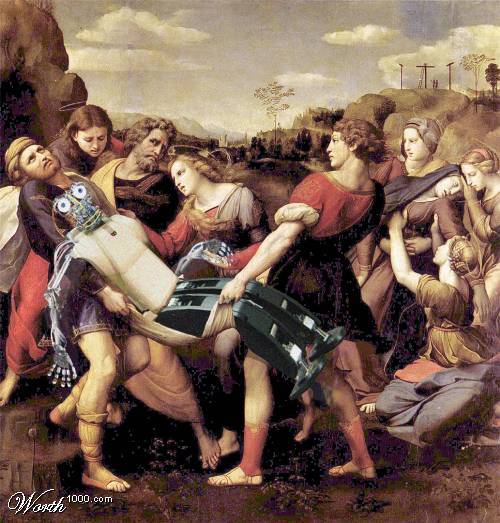
(image: The Green Muse by Albert Maignan, 1895)
Why Spontaneity Comes from Following the Rules

by Tuesday, October 05, 2010
Over at Lateral Action, there is an interesting (& rather deep) post regarding a conversation between Brian Eno and the developer of Sim City, and the application of rules bringing about successful spontaneity. Read the full article here:
http://lateralaction.com/articles/brian-eno-will-wright/


The simplest, and most profound, summation of this conversation came in the final segment, quoted here:
Play It Simple

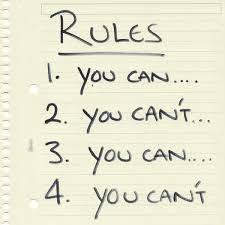
A point that comes up repeatedly in the Eno/Wright talk is that complex results emerge from simple rules. No rules mean there is no system, so nothing is generated. But if you add too many rules and risk breaking the system. The trick is to find just enough rules to get the system under way without destroying it prematurely.

Listening to the talk, I was reminded of playing improvisation games at The Spontaneity Shop: when actors try to improvise a scene in which ‘anything goes’, the results are flat and lifeless.

But introduce a simple rule such as ‘one of you is higher status and the other’, and it starts to come alive. Tweak the rules slightly – ‘one of you is the servant but acts higher status than the master’ – and you have a recipe for spontaneous comedy.

Twitter is another good example of a generative system. When I first tried Twitter, I didn’t see the point. There was so little I could do. Type a 140 character message? Get messages from other people? Is that all?

But when I was persuaded to persist with Twitter, I discovered the incredible richness of the conversations and connections it facilitates. Now you can find me there most days. It’s one of the very few web applications I would genuinely miss if it disappeared overnight.

I’m not the first one to be puzzled by Twitter’s lack of ‘obvious’ features that can be found in similar – but less successful – networks such as FriendFeed or Plurk. But Eno and Wright would probably argue that Twitter is so successful because its rules are so simple.

But how can you know in advance which rules will bring you the best creative results? Which ideas should you pursue and implement, and which should you leave on the drawing-board?

You can’t.

Which means you have to try things, play around with them, test quickly and test often. Allow failure to tag along as a daily playmate.

Isn’t that the beauty of real creativity, that you wake up every morning not knowing what you’re going to discover?

How much do I love those final few sentences. Testing ideas, playing, and being open to failure. Knowing that we *don't know* the outcome, and letting it reveal itself through the process. This is what I mean when I talk about organic creativity! Rules are powerful! Rules are what gives structure to our attempts, what binds together disparate ideas and aesthetics into something solid, tangible, impactful. The results are something familiar to everyone on some level, yet truly unique to us. We use the rules as a tool to create something greater than we could have if we had not defined them and honored them to begin with. And of course, the other lesson in this article is to not impose too many rules. Find those which are truly important, truly valuable to the process and the outcome, and let the rest flow as it will. I aspire to be this confident and comfortable in my creative process, through the thoughtful, sparing, application of rules.

The Benefit of Letting Go

by Friday, September 10, 2010
A great post from Lateral Action:
http://lateralaction.com/articles/creativity-unconscious/

"Whenever you set out to do something extraordinary, there comes a point where... you have to choose between trying to control everything – or letting go and getting carried away by something bigger and more powerful than yourself."

It reminds me of a similar message from Elisabeth Gilbert in her TEDTalk, which I adore so. Head over to see a man about a horse, and possibly enjoy the same "hell yeah" I experienced when reading it. ;)

Organic Process: The Art of Seeing

by Monday, December 14, 2009
All the way back in May, I was pondering the collision of modern media and the organic process of artistic creation. In that post I wrote:

"A sculpture or a painting--even a piece of music or a video--is not expected to change, and is appreciated for its unchanging beauty. It is it's solidity that is part of its appeal, in a way. We see the same piece over time, and instead of expecting it to change or adapt to us, our perspective adapts and changes. We see it (hear it, experience it) from different angles, in different lights, in a different environment, our attitudes change, our perceptions change; and we find that our appreciation deepens and becomes richer and more multi-faceted as we take the time to consider the piece from all these perspectives. The work to appreciate that art day-to-day is in our hands as the viewer."


Behind the cut below is a vintage video which discusses a related topic: that how classic art is viewed today is so radically different from how it was when those works were created. One of my favorite quotes:

"As you look at (the art) now, on your screen, your wallpaper is around them, your window is opposite them, your carpet is below them. At this same moment, they are on many other screens, surrounded by different objects, different colors, different sounds. You are seeing them in the context of your own life. They are surrounded not by gilt frames, but by the familiarity of the room you are in and the people around you.

Originally paintings were an integral part of the building for which they were designed. Sometimes when you go into a Renaissance church or chapel, you have the feeling that the images on the wall are records of the building's interior life. Together they make up the building's memory, so much are they are part of the life and individuality of the building. Everything around the image is part of its meaning. Its uniqueness is part of the uniqueness of the single place where it is. Everything around it confirms and consolidates its meaning."


Which made me think about different pieces of dance performance art, and how for me it is ideally a reflection of the dancer's (or dancers') "interior life". And that sometimes, that context is so integral to fully appreciating the performance, yet we don't often have that piece of the puzzle. We are viewing it and assessing it "in the context of (our) own life", as an audience, by the familiarity of the room we are in and the people around us, no less! How much of the backstory is necessary to make a concept piece really effective for our audience, and how much is it lost if we just put it out there without our audience having any perspective on the creative roots from which the concept has sprung? When they go "huh", is it the audience's lack of vision or personal context, or did we fail as performers to make our intent and creative vision clear? And even further, how much does venue play a part of such a performance?

Is this part of the key in the proliferation of poor fusion out there? Lack of context? My very rambling stream of consciousness behind the cut...

Is it the crux of the problem that new and blossoming dancers are viewing fusion of another artist--a fusion which sprung from that artist's personal context, which the viewers are not privy to in any detail--and then parroting that style or creative choice without any personal context?

And then we have to ask, is it a failure of the performer to really access and present a honest "interior life" (rather than a contrived or copied one) in the work?

Or is there simply a lack of an understanding, on the part the audience, of an expression which is coming truly from within the dancer on stage?

Certainly the latter seems to be the cry of the struggling artist. I find that most often when dancers are challenged on their artistic choices, the volley back is "You just don't get it!" Soon followed by "I will do whatever I WANT. I am an ARTIST!!" The insinuation is that it is entirely on us, the viewer, to do the work of understanding and appreciating, and none of that rests on the performer themselves. That their job is only to do whatever they feel, whatever they think makes sense in the context of their life (even if it is sometimes a completely superficial copy of someone else's choices) without consideration of their audience. But I would argue that we are not just visual artists as dancers; that as performers, we are also necessarily entertainers. And while part of our job is an internal struggle to create something genuine from within ourselves, the other part is translating it into something for others to consume. If your work is truly from within you, and you want to put it out there for others to share in, the next step is to consider how you will best convey your message so others can appreciate it.

So following this train of thought, I ponder many questions...

How much of copying another's style is a stepping stone to a more personal expression, and how much of it is a crutch to avoid the real work of personal development?

How much of the responsibility to make any performance piece understood is in the hands of the performer versus the eye of the beholder? And what role to we performers have in helping the latter along? Is it creative sacrifice or creative consideration to change our original vision in any way to be more palatable to our audience?


Exercising your creativity!

by Thursday, September 03, 2009

Happy Birthday to Me!!

Thanks to all my readers here. I appreciate your feedback from the many places you read my blog posts from, so a shout out to my RSS feed readers, my Facebook buddies, my LiveJournal friends list, and Tweeters! If you get a chance, post a little hi-hello here today. Would make my day to hear from you here on the blog!

From http://www.luminous-landscape.com/columns/Exercising-Creativity.shtml

"Creativity may be described as focused freedom. On the one hand you are free to create, on the other hand you are focused upon your work and your vision. It is a mix of two opposite directional forces in a way. In that respect it is a challenging state to find, to experience and to make happen. However, once you are in this state, magical things can take place that would not otherwise happen to you. "

Visit the article to read more

Prepare to have your mind blown: THREADCAKES!

by Wednesday, August 12, 2009

Okay, so there is something called "ThreadCakes", which is cake designs based on Threadless tee shirts.

In case you don't already know and love Threadless:
http://www.threadless.com

And here is Threadcakes:
http://www.threadcakes.com/

So not only did this person make an AMAZING ThreadCake, they videotaped themselves creating it every single step of the way, then edited together a cool video showing it being done!!
http://www.youtube.com/watch?v=DniNlmnM1co

HOLY HELL, RIGHT?!?!

I found this via the blog Cake Wrecks that a friend linked me to.

Creative Fun: Drawing!

by Wednesday, July 29, 2009
In the course of doing the Artist Way several times over the past 10 years, I have sought out various avenues of creative expression for my Artist Date. In the second chapter of the book, you are told to make a list of all the things you have wished to do, but never made the time or gave yourself permission to do. One of my big ones was drawing and illustration. Just never made the time.

Enter DrawSpace.
http://www.drawspace.com/

There are lots of online lessons in drawing, from simple shapes to shading, to more detailed lessons in learning how to use scale and proportion and beyond. I thought I would pass it on in case anyone else has a hankerin' to do something crafty, and all ya need is a pencil and a piece of paper. Some of these lessons I would print out and bring with me when I was waiting for class to begin or at a coffee house, or even just my back deck in the sunshine. Enjoy!

TEDTalk - the life of a Creative

by Tuesday, April 21, 2009
I posted this a few places not long ago, but it is worth another look. Really incredible talk by the author of "Eat, Pray, Love" (good book, by the way!) about what it is like to be a Creative, and the importance of accessing a "divine inspiration" to keep your work alive and relieve the pressures of being simply human.
I totally cried when I watched this, and again now as I re-watched it. Enjoy!


PLEASE VISIT MY DANCE BLOG!


On this blog I share my personal posts about cooking and knitting, travel and other musings; while I will blog about dance-specific topics over on the Deep Roots Dance blog:
http://www.deeprootsdance.com

I hope you will enjoy both my sites. Thanks for visiting!
Powered by Blogger.