
Smartphones = Wallets

by Friday, October 08, 2010
It is alarming to me how often I hear about people leaving their smart phone or their iPod touch behind at restaurants, in their cars in plain view, or it slipping out in a parking lot or theater. Losing an iPod touch or a phone these days is more like losing your wallet, with ID and credit cards all in there. (And a lot like losing a laptop, too!)

Recently on Ravelry, a woman said that her iPod touch had slipped out of her bag on a university campus. The young man who found it opened it up, and she was logged into her mail and Facebook (among other social apps and such), which she uses all the time and keeps up and running. Luckily, this young man posted his phone number to her wall, so she could call and recover it (unfortunately with a broken screen from being dropped and run over by a car, apparently, but still running!).  But to think what he COULD have done with the data on that "entertainment device" is alarming.

These things hold a lot of data that can be used inappropriately, for sure.  So guard it like you would a wallet! You wouldn't just let a wallet slip out of your purse, would you? You keep it in a secure spot in your bag, don't you? Do the same with your iPod touch or phone. You don't leave the restaurant without your wallet, do you? I sure hope not. You keep it tucked in your pocket or purse when not in use, right?  Do the same with your devices.

Just a friendly reminder to keep your identity secure, and not let these "entertainment electronics" become a ID theft nightmare.
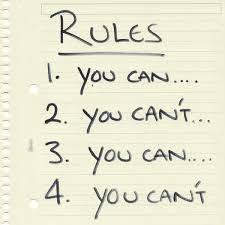
Why Spontaneity Comes from Following the Rules

by Tuesday, October 05, 2010
Over at Lateral Action, there is an interesting (& rather deep) post regarding a conversation between Brian Eno and the developer of Sim City, and the application of rules bringing about successful spontaneity. Read the full article here:
http://lateralaction.com/articles/brian-eno-will-wright/


The simplest, and most profound, summation of this conversation came in the final segment, quoted here:
Play It Simple

A point that comes up repeatedly in the Eno/Wright talk is that complex results emerge from simple rules. No rules mean there is no system, so nothing is generated. But if you add too many rules and risk breaking the system. The trick is to find just enough rules to get the system under way without destroying it prematurely.

Listening to the talk, I was reminded of playing improvisation games at The Spontaneity Shop: when actors try to improvise a scene in which ‘anything goes’, the results are flat and lifeless.

But introduce a simple rule such as ‘one of you is higher status and the other’, and it starts to come alive. Tweak the rules slightly – ‘one of you is the servant but acts higher status than the master’ – and you have a recipe for spontaneous comedy.

Twitter is another good example of a generative system. When I first tried Twitter, I didn’t see the point. There was so little I could do. Type a 140 character message? Get messages from other people? Is that all?

But when I was persuaded to persist with Twitter, I discovered the incredible richness of the conversations and connections it facilitates. Now you can find me there most days. It’s one of the very few web applications I would genuinely miss if it disappeared overnight.

I’m not the first one to be puzzled by Twitter’s lack of ‘obvious’ features that can be found in similar – but less successful – networks such as FriendFeed or Plurk. But Eno and Wright would probably argue that Twitter is so successful because its rules are so simple.

But how can you know in advance which rules will bring you the best creative results? Which ideas should you pursue and implement, and which should you leave on the drawing-board?

You can’t.

Which means you have to try things, play around with them, test quickly and test often. Allow failure to tag along as a daily playmate.

Isn’t that the beauty of real creativity, that you wake up every morning not knowing what you’re going to discover?

How much do I love those final few sentences. Testing ideas, playing, and being open to failure. Knowing that we *don't know* the outcome, and letting it reveal itself through the process. This is what I mean when I talk about organic creativity! Rules are powerful! Rules are what gives structure to our attempts, what binds together disparate ideas and aesthetics into something solid, tangible, impactful. The results are something familiar to everyone on some level, yet truly unique to us. We use the rules as a tool to create something greater than we could have if we had not defined them and honored them to begin with. And of course, the other lesson in this article is to not impose too many rules. Find those which are truly important, truly valuable to the process and the outcome, and let the rest flow as it will. I aspire to be this confident and comfortable in my creative process, through the thoughtful, sparing, application of rules.

Certifications...what do you think?

by Sunday, October 03, 2010
Here's the truth of it: When it comes to training intensives, I sometimes wish there were no certificate tied to the coursework. 

Particularly in programs which are essentially "participation certificates" rather than tested on demonstrated knowledge and ability, I feel it gives a false sense of accomplishment to the participant, and sends a confusing message to the public that one need only take a few days of workshops and suddenly you can be "officially certified" in a given style or skill. It diminishes both the idea of a certificate and the art/style itself, in my opinion. This is one way in which I have a lot of admiration for the Suhaila certification program. While it has never been of interest to me to pursue, I can see the tremendous value in the way it is structured, and the tangible feedback it provides the dancers--as a friend once said, it can be a roadmap for personal goal setting, and that's fantastic.

 
At the root, I would rather we focus on the meat of a dancer's/teachers' skills--proven through time and experience and demonstrated skill--than pieces of paper.  
I found my certification training with Gypsy Caravan, FatChance, and now Jamila (still to test, but took the course) to have been incredibly valuable to not only my technique, knowledge, and teaching ability, but also gave me a tremendous sense of history and perspective. Like the proverbial elephant and the blind men, we're all touching different parts of the dance, and are limited by the part we have in our immediate reach. By being exposed to other teachers' and dancer's experience/part of the elephant, I feel I have a better idea of the bigger picture and where I fit into it. If slapping a certificate on it encourages more people to pony up the cash and time to commit to these programs and grow as a result, I suppose in the end it's a Good Thing. But I didn't care one tiny bit if I held a piece of paper at the end of them, because what I got out of these experiences couldn't be measured in that way.

What do you think of certifications in the bellydance world today? Any you particularly endorse or eschew? What are your experiences?

Web design...

by Wednesday, September 29, 2010
Had a few more contracts crop up for web design lately. I am trying to streamline my design process, but am finding it tough. I just like the visual design part so much better than the code part!

So today I "attended" my final online Web Design Bootcamp webinar, and it covered HTML5 and CSS3 in brief. In particular, "embedded" fonts in web page design. But it's so much more than that. Whew!  I feel overwhelmed with the possibilities and what new things I will need to learn to take advantage of it. With 98% of all browsers supporting the new font functionality, we can start using it RIGHT NOW. how exciting is that? Even IE is ahead of the game on this one. Looking forward to seeing what it allows us to create...

Bringing emotion to your dance

by Tuesday, September 28, 2010
From my background in theater and dance, to a life seeped in bellydance and dance in general full-time, I have learned that one of the most powerful methods of showing emotion in performance is having a story firmly in mind as you perform.  Just saying "I am going out there to have fun and smile," doesn't quite have the same impact as coming up with a more detailed motivation or imagined goal in mind when you take the stage. So You Think You Can Dance liberally uses themes, props, and elaborate stories to create their unique dances, which is inspiring. We, too, can be guided by a story through the entire creative process, which can inform not only our movement and emoting on stage, but also costume and musical choices as well to support the story further. Though I would caution that one must be careful at becoming too literal or trite.

The dance itself--the body, the face, the movement--not costume or music or props, should always communicate the story first and foremost.  

After all, a large cross-section of the recent vaudeville-inspired theatrical-circus-theme craze has been disappointingly unbalanced: Over-storied, over-costumed, over-propped, and under-danced. The dance is the central and most important part, and the story and any trappings built around it should support and supplement the emotional content and skilled execution of the dance itself. A really great dance can be performed with the dancer wearing a plain white tee shirt, or something similarly mundane, and can still clearly communicate emotion.

So how does one create a story? Soloists have an easier time at this because the stories need not have a universal and shared emotional meaning among a group, but instead can be something very personal to them alone. (For example, Sa'Elyssa's "For My Grandmother"--a dance to honor her grandmother who had passed away--reduced me to tears.) But with some thought and discussion groups can create a story and stage their piece with a collective image in mind to help channel their emotional energies. My last troupe did this on many occasions with great effect. Our "Home" piece was one that is lovingly remembered not only by the audiences that saw it, but we who danced it. The story we built into it was very very personal to our dance family and surrounded universal feelings of loss and fear, friendship, and of course as the song name and lyrics reveal, the feeling of being home. We didn't have any sort of intro at most performances of it, and we did not costume or set a backdrop or props of any kind, so there was not always an opportunity to lead the audience into our story with any kind of explanation. The only cues were our physical selves--the way we staged our movement among and with one another, the way we felt as we imagined our story when dancing it, and the way our faces and bodies communicated our thoughts and feelings as we performed came through for our audiences, who sometimes were brought to tears without knowing quite why it impacted them so profoundly.  Of course tears aren't the only way we would hope to have our audiences manifest their appreciation of what we do, but it sure is a powerful one!

Another method to add further depth to your audience interaction is to put characters of your story in the audience. Planting archetypes in your mind and then acting as if you are seeing them and playing to them when you dance can have great effect. Say you plan to find your new best friend to the left of the stage, your ex-boyfriend you are showing off for to the right of the stage, and your proud mother in the center. Find people in the audience and fix them with your eyes and intention and dance for those imagined characters and see if it doesn't change the way you move and emote!

What other ways do you build story and character into your performances?

PLEASE VISIT MY DANCE BLOG!


On this blog I share my personal posts about cooking and knitting, travel and other musings; while I will blog about dance-specific topics over on the Deep Roots Dance blog:
http://www.deeprootsdance.com

I hope you will enjoy both my sites. Thanks for visiting!
Powered by Blogger.